
At JAPEX 2026 in Jamaica, tourism and technology leaders discussed a significant change in how travellers may soon discover and purchase Caribbean experiences.
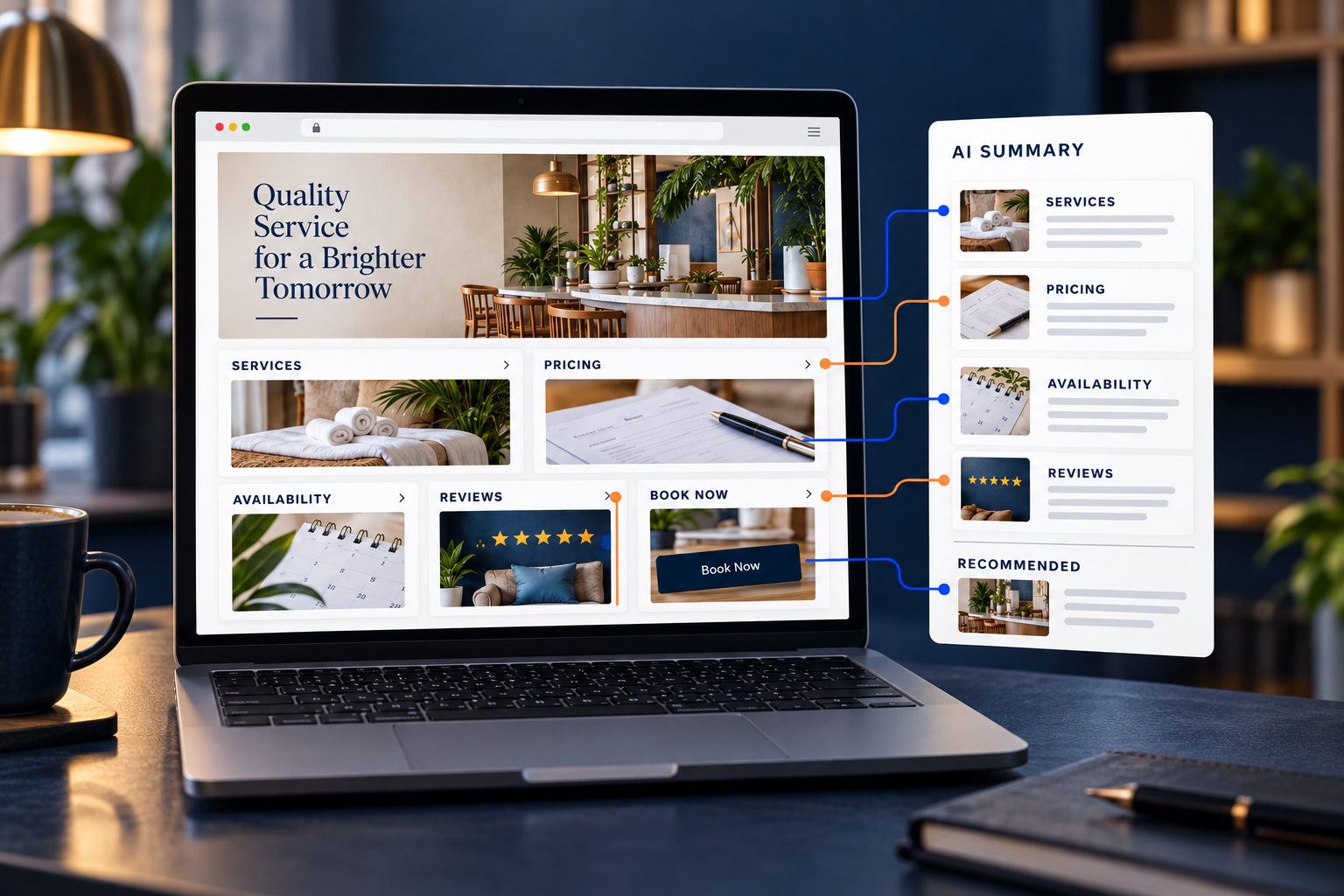
AI assistants are moving beyond answering questions. They are beginning to compare options, assemble itineraries, check availability and support bookings. The businesses most likely to remain visible in that environment will be those with accurate, accessible and machine-readable information.
That is an important conversation for Caribbean tourism. It is an even more important warning for Caribbean business generally.
The real question is not simply whether your hotel, attraction or destination is ready for AI. Is your business ready?
01
Customers are no longer waiting for your advertisement
Advertising still matters. It creates recognition, shapes perception and can introduce a customer to an offer. However, customers are not relying on advertising alone to make decisions.
They are searching. They are comparing. They are reading reviews, checking prices and asking increasingly specific questions before they contact a business.
They are also taking those questions to AI.
Even traditional search is changing. A customer may now receive an AI-generated summary before reaching the familiar list of website links. Google describes its AI Overviews as snapshots that bring together information and links from across the web.
The new visibility challenge is therefore not simply appearing in search results. It is becoming part of the answer.
If an AI platform is asked to identify the best provider for a particular need, can it understand what your business offers? Can it verify your location, pricing, availability, eligibility requirements and policies? Can it find credible evidence that supports your claims?
If that information is incomplete, inconsistent or buried inside social media posts and PDF brochures, the answer may be no.
02
What does machine-readable inventory actually mean?
The word inventory may suggest products sitting on a shelf, but every business has some form of inventory.
For a retailer, it includes products, prices, specifications, sizes and stock availability. For a hospital, it includes services, specialists, operating hours, appointment requirements and payment options. For a restaurant, it includes menus, prices, dietary information, locations and reservation availability.
A property company has listings, features and viewing arrangements. An insurer has products, coverage, eligibility rules and exclusions. A consultant has services, sector experience, deliverables and engagement options.
Machine-readable inventory means presenting this information in a clear, consistent and structured form that search engines, AI platforms and other digital services can interpret accurately.
It does not mean writing your website for robots or filling it with awkward keywords. It means removing ambiguity.
Google's own guidance explains that structured data gives its systems explicit clues about the meaning of a webpage. It can identify whether something is a product, event, organisation, location, review or frequently asked question rather than treating every page as an unstructured collection of words.
This is not a technical exercise for its own sake. It is a discoverability and customer-experience exercise.
03
Being mentioned is not the same as being chosen
A business may already appear in search results or an AI-generated response, but visibility alone does not guarantee consideration.
Customers still need enough information to assess whether the business is right for them.
- Where can I get an ultrasound in East Trinidad on a Saturday?
- Which local skincare brands deliver to Barbados?
- What venues in Port of Spain can accommodate 100 people and provide catering?
- Which insurance plans cover small businesses with fewer than ten employees?
A business with clear service pages, accurate opening hours, transparent requirements, credible reviews and an easy next step is more likely to enter that consideration set.
A business whose information is scattered across Instagram captions, old Facebook posts, downloadable flyers and unanswered WhatsApp messages has made the decision more difficult for both the customer and the technology assisting them.
04
What should businesses do now?
AI readiness does not begin with purchasing an AI tool. It begins with improving the quality and accessibility of the information the business already owns.
- Audit what customers need to know. Document the questions customers ask before purchasing, booking or requesting a quotation. These questions should shape your website content, service pages and FAQs.
- Create a clear page for every important offer. Each priority product or service should have its own accurate description, audience, benefits, requirements and next step.
- Structure the information properly. Use appropriate structured data, consistent product or service categories and clear page titles. Ensure prices, availability and policies can be updated without rebuilding the website.
- Remove contradictions. Your website, Google Business Profile, social platforms and third-party listings should not show different opening hours, contact details or prices.
- Strengthen your evidence. Clear reviews, recognised certifications, detailed case studies and credible third-party coverage help establish that your claims can be trusted.
- Make the next action obvious. Customers should be able to book, buy, enquire or speak with the right person without navigating unnecessary steps.
Businesses should also test what AI platforms currently say about them. Ask realistic customer questions and examine the responses. Look for missing services, outdated information, weak descriptions and competitors that appear more consistently.
The objective is not to manipulate an AI-generated answer. It is to ensure that your business provides enough accurate, useful and credible information to be considered.
05
This is a marketing responsibility
Machine readability may sound like something for the IT department, but it sits directly at the intersection of marketing, customer experience and commercial strategy.
Marketing teams understand how customers describe their needs. Operations teams know what is genuinely available. Technology teams know how that information can be structured and maintained.
These functions must work together.
A technically perfect website with vague content will struggle. Strong advertising linked to outdated information will create frustration. An AI chatbot cannot compensate for a business that has never properly documented its offers, policies and customer journey.
The brands that gain an advantage will not necessarily be the ones making the loudest claims about AI. They will be the ones doing the less glamorous work of making their businesses easier to understand, easier to trust and easier to choose.
The Caribbean tourism conversation has given us an early warning. The lesson belongs to every industry.
Your business may already be online. The more important question is whether the next generation of customers and the technology guiding their decisions can clearly understand why they should choose you.
Sources